Beyond the Highway: The Case for a Stripped-Back, Industrial Ami
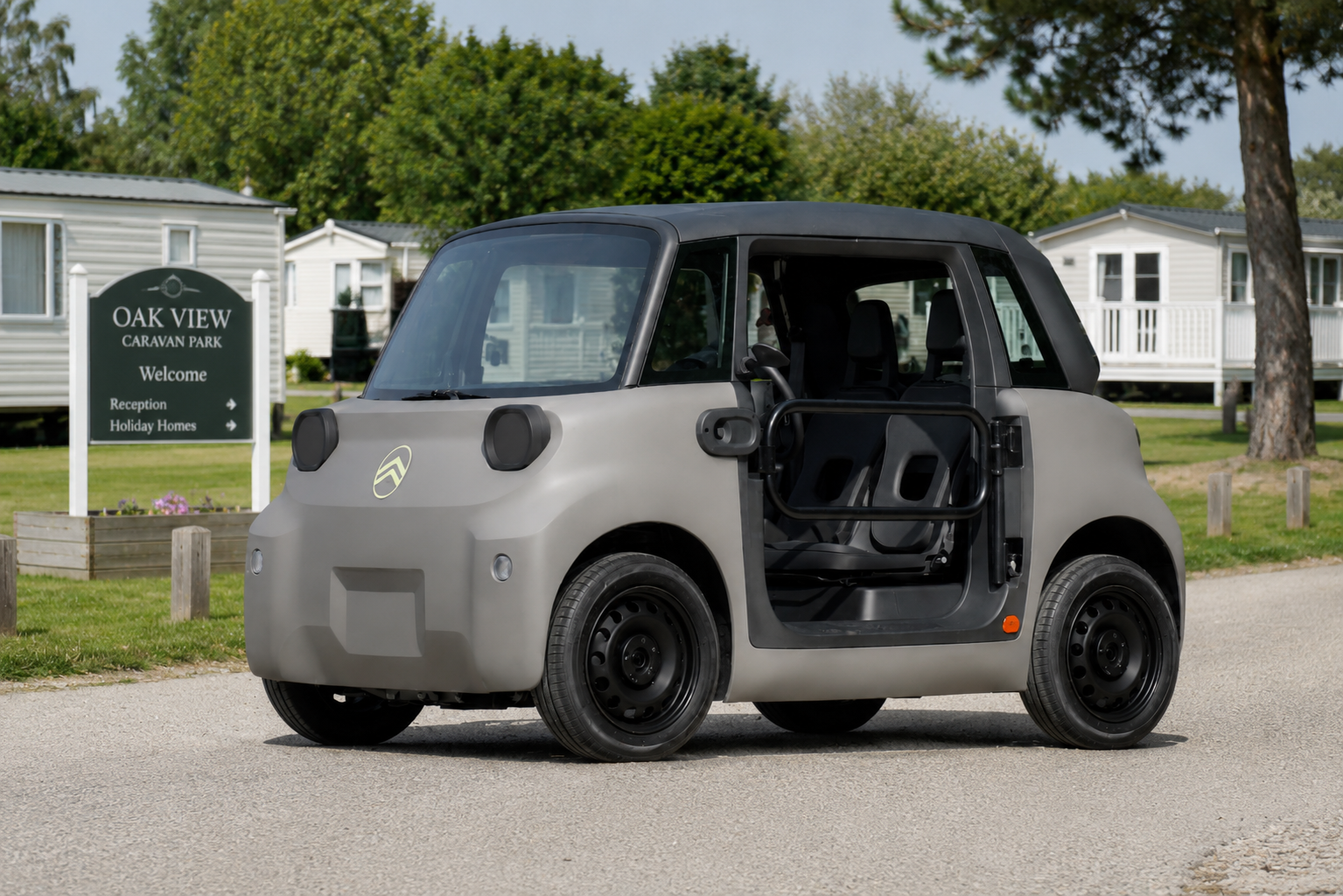
But what if it didn’t have to be?
Across Europe, thousands of warehouses, factories, airports, holiday parks, campuses, and logistics centres move people and equipment every day without ever touching a public highway. For these operators, a significant proportion of road-legal requirements could be removed. That raises a simple question: why isn’t Stellantis building a dedicated Industrial Ami?
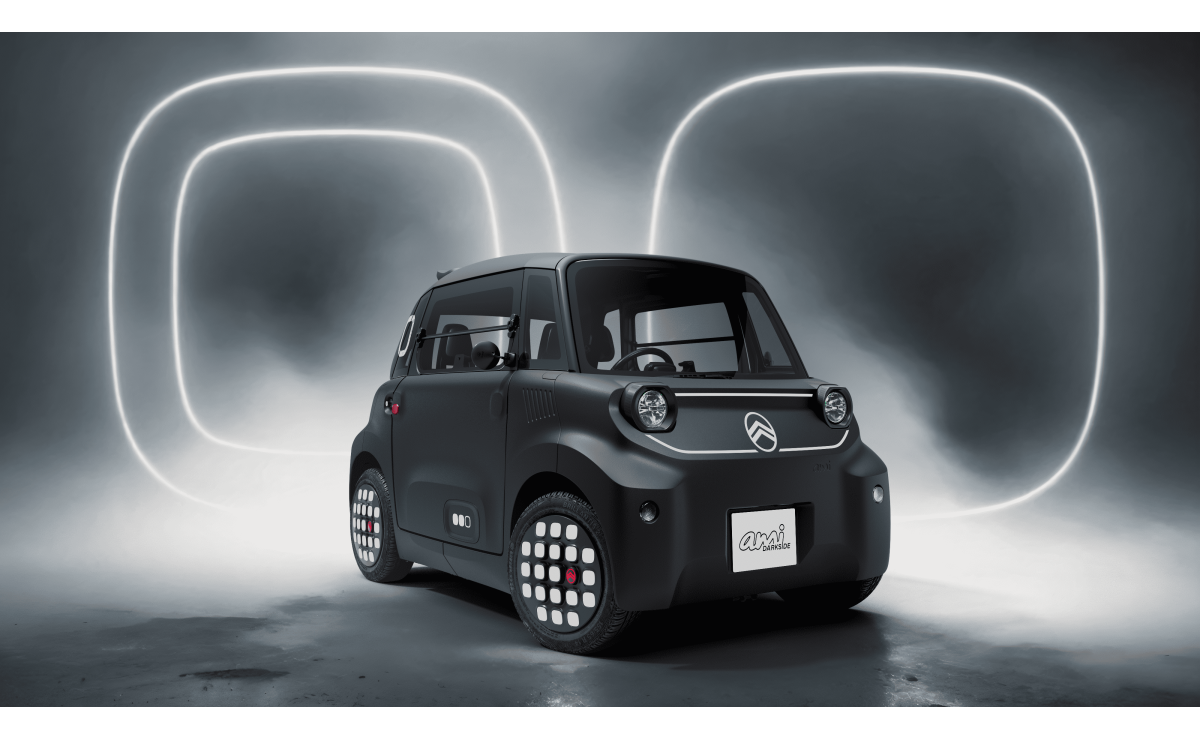
The Citroën Ami: not often described as over-engineered, but arguably designed for far more than some use cases require. (Image credit: Citroën / Stellantis)
Stellantis is already the king of the low-cost quadricycle market. But if that same mass-production scale were applied to a non-road-legal “Industrial” chassis, it would enter a price bracket with almost no meaningful competition. By stripping away the requirement for highway homologation, Stellantis could effectively move the goalposts: replacing the expensive, niche-market site buggies of today with a mass-produced, modular tool that is cheaper, tougher, and more practical than anything else in the industrial sector.
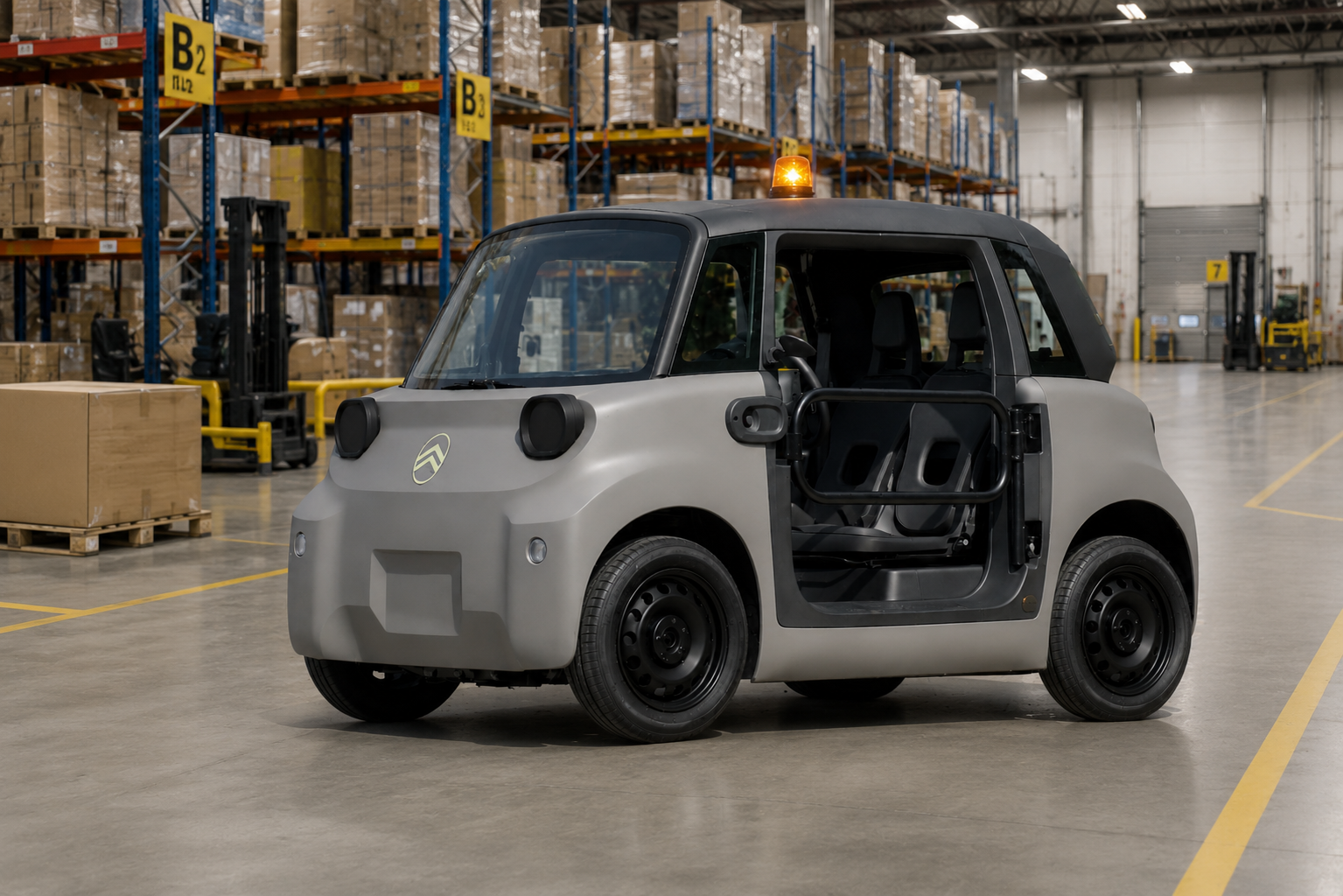
Warehouse operations could replace expensive site buggies with a mass-produced Industrial Ami platform. (Image credit: The New Yardstick)
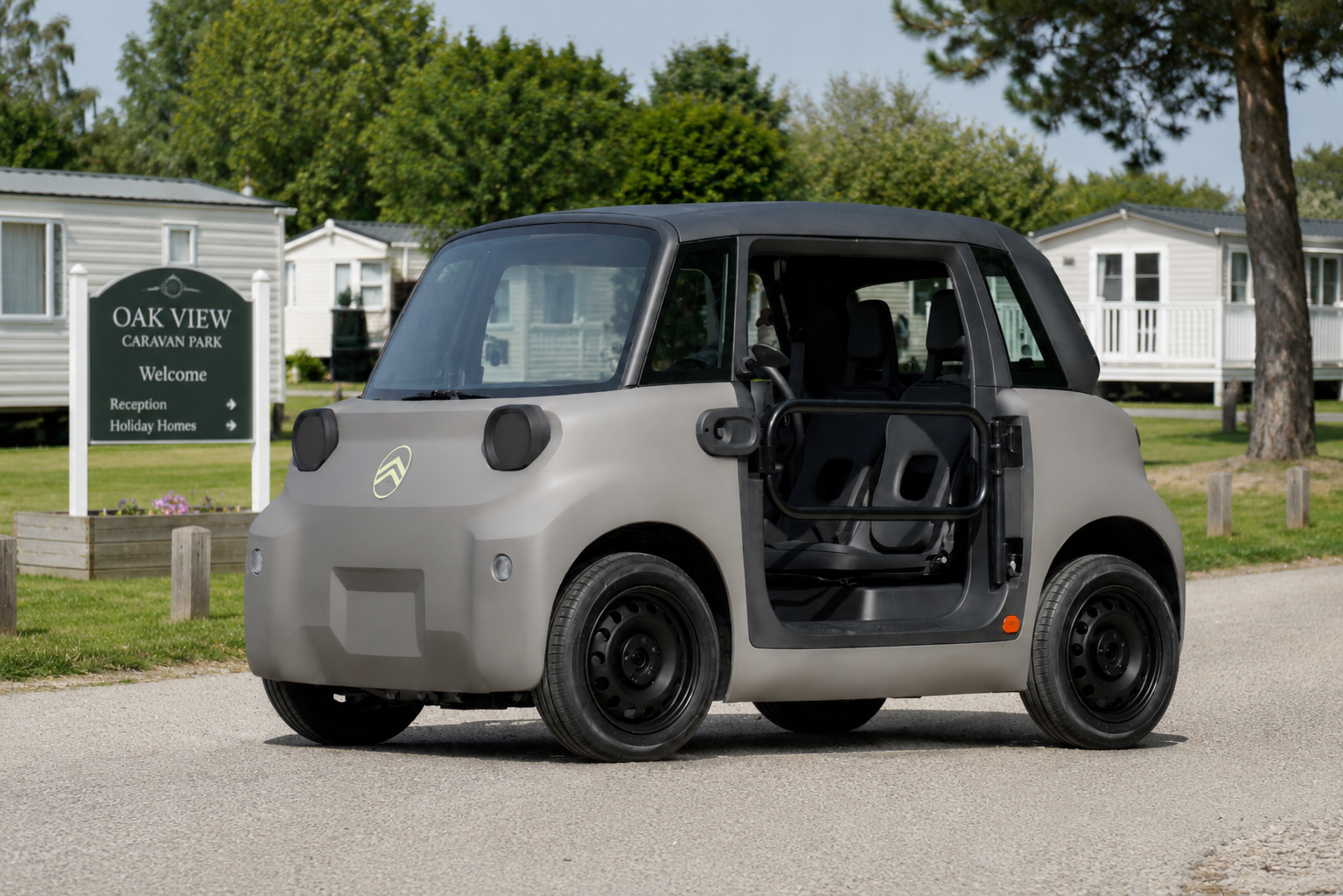
The biggest advantage of an Industrial Ami isn't additional capability—it's subtraction.
Every road-going vehicle sold in Europe carries a long list of costs associated with public-road operation. Crash structures, certified lighting, laminated safety glass, registration requirements, complex locking systems, and various homologation processes all add expense to the final product.
For an electric utility vehicle that never leaves private land, many of these requirements simply don't exist.
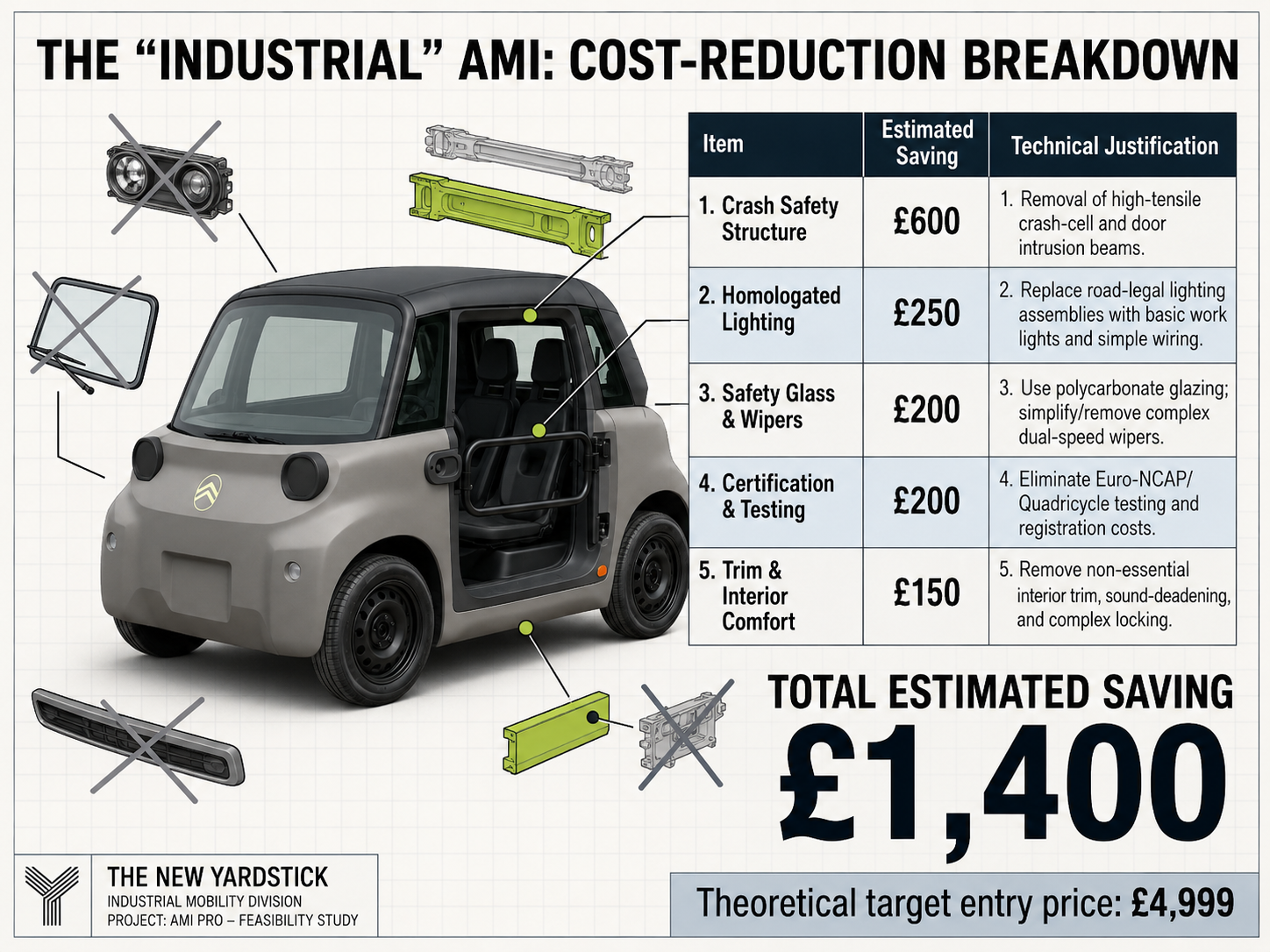
The arithmetic is surprisingly straightforward. In the UK, the Ami's £7,695 retail price includes VAT, leaving a pre-tax price of around £6,400. Our feasibility study suggests that removing non-essential road-going equipment and the associated certification requirements could theoretically trim around £1,400 from manufacturing and development costs, bringing a stripped-back Industrial Ami towards the £5,000 mark before tax and optional equipment. [image credit : The New Yardstick]
A Market Hiding in Plain Sight
Industrial site vehicles already exist, but they tend to occupy an awkward niche. Purpose-built utility carts and electric buggies are often expensive, low-volume products designed for specialist applications.
An Industrial Ami could attack the problem from the opposite direction.
Rather than building a bespoke site vehicle, Stellantis could adapt an existing mass-produced platform already benefiting from economies of scale.
For warehouse operators, holiday parks, universities, airports, and large industrial estates, the result could be a practical electric workhorse that costs less to buy and maintain than many dedicated alternatives. Unlike specialist utility carts, an Industrial Ami would also benefit from Stellantis' existing parts network and established manufacturing base, reducing downtime and simplifying maintenance for fleet operators.
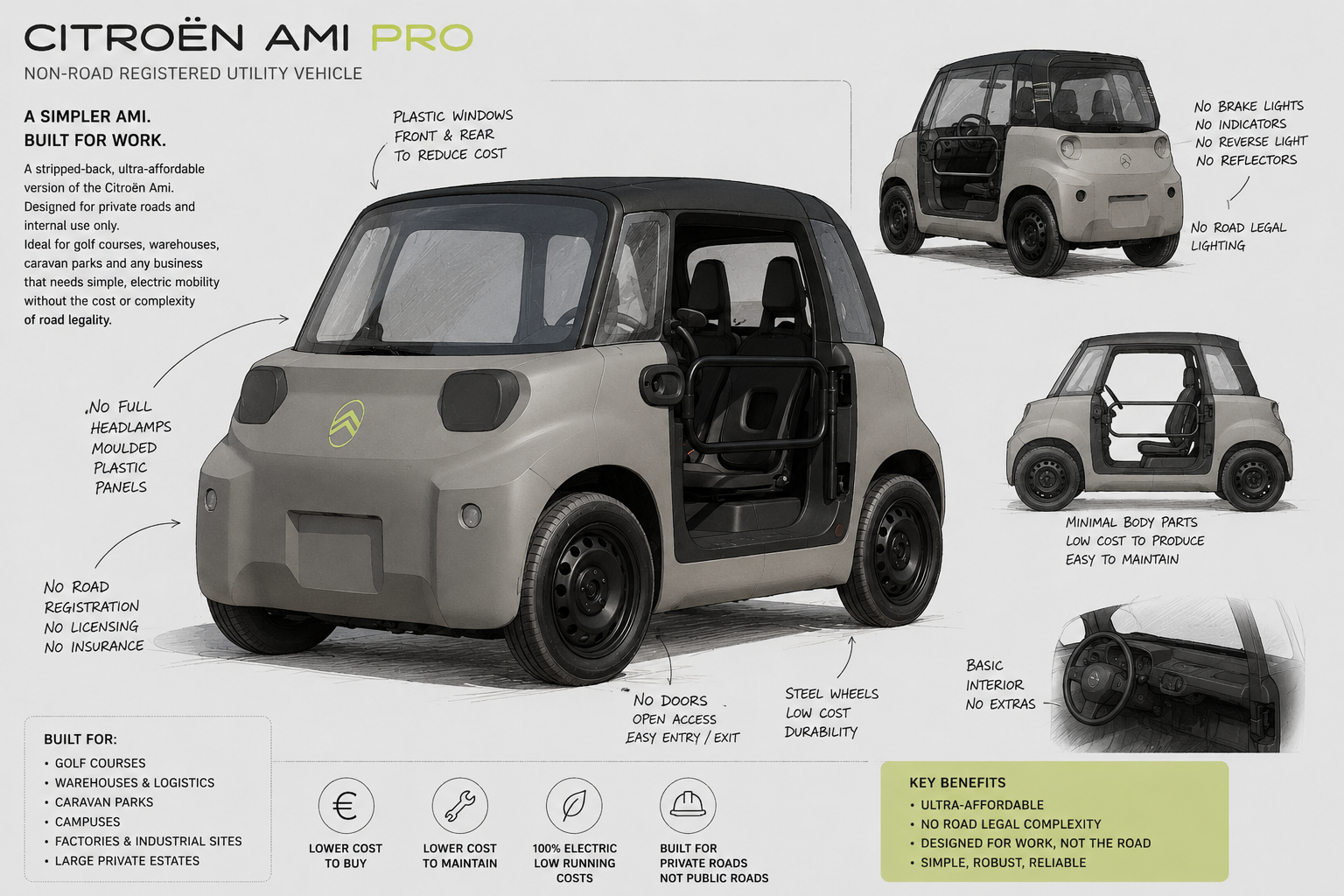
The Industrial Ami wouldn't require an entirely new vehicle programme. Most of the engineering work has already been completed. The battery, motor, chassis, and basic body structure already exist, allowing Stellantis to focus on simplification rather than reinvention. [image credit : The New Yardstick]
Instead, the project would involve removing complexity rather than adding it.
In an automotive industry increasingly obsessed with larger batteries, more technology, and greater performance, there may be a surprising commercial opportunity in doing the exact opposite.
The smartest electric vehicle Stellantis builds might not need to drive on the road at all.
You should also read:
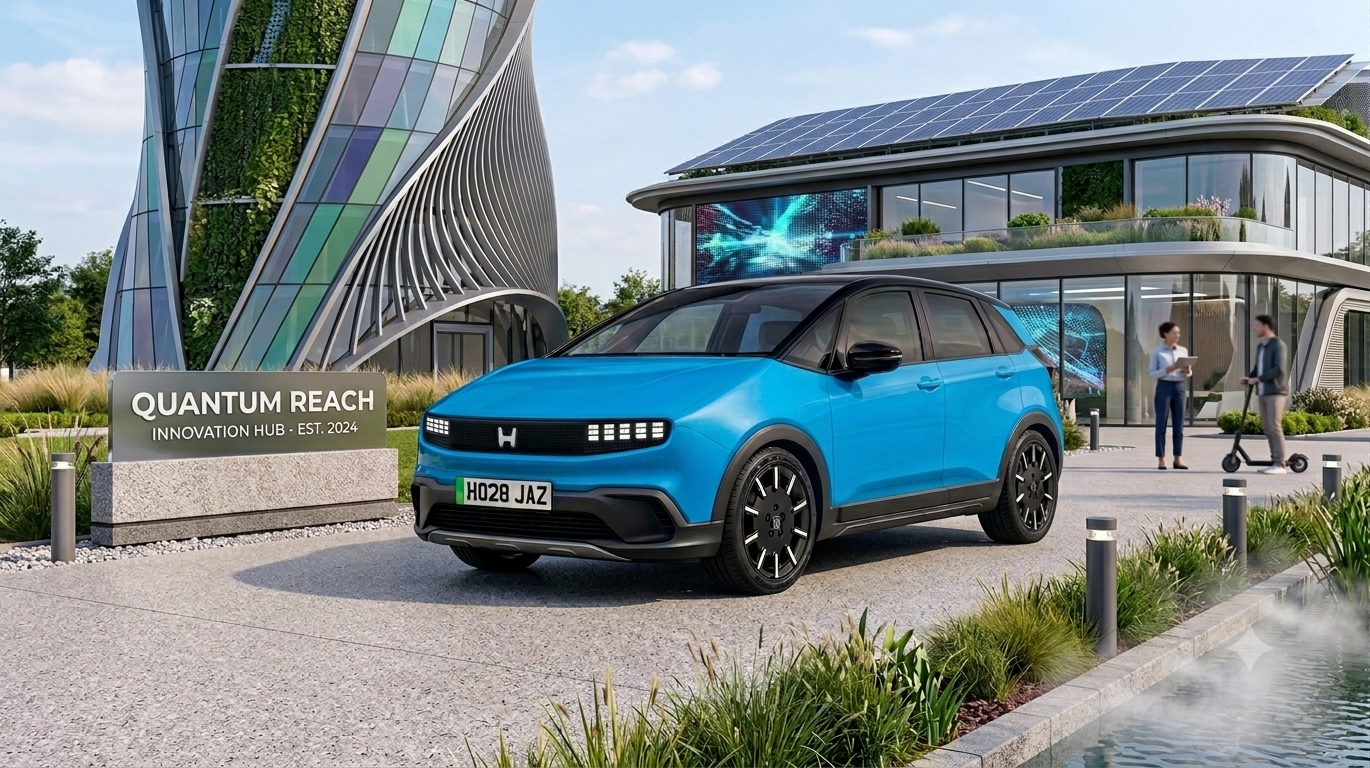
Finding the Magic in Jazz: The Case for a Renault-Based Honda EV
Honda doesn't have an engineering problem. Long before hybrids became mainstream, the original Insight arrived with its aerodynamic bodywork and lightweight engineering, becoming one of the world's first mass-produced hybrid cars. Honda spent decades building a reputation for clever packaging and innovative powertrains. Its problem…
Continue reading...